Phylogenetic Trees and the Climate-Niche Evolution of Leaf-Warblers

By: Emily Desrosiers, Molly Nyhan, and Tyler Umbra (Stonehill College, BIO323: Evolution, Spring 2026)

In the forests of Europe and Asia, there is a group of small, greenish birds called leaf-warblers. These birds look physically identical to the average person as well as many experts. For years, they have been an evolutionary puzzle: how do species that look so similar end up living in such vastly different environments?

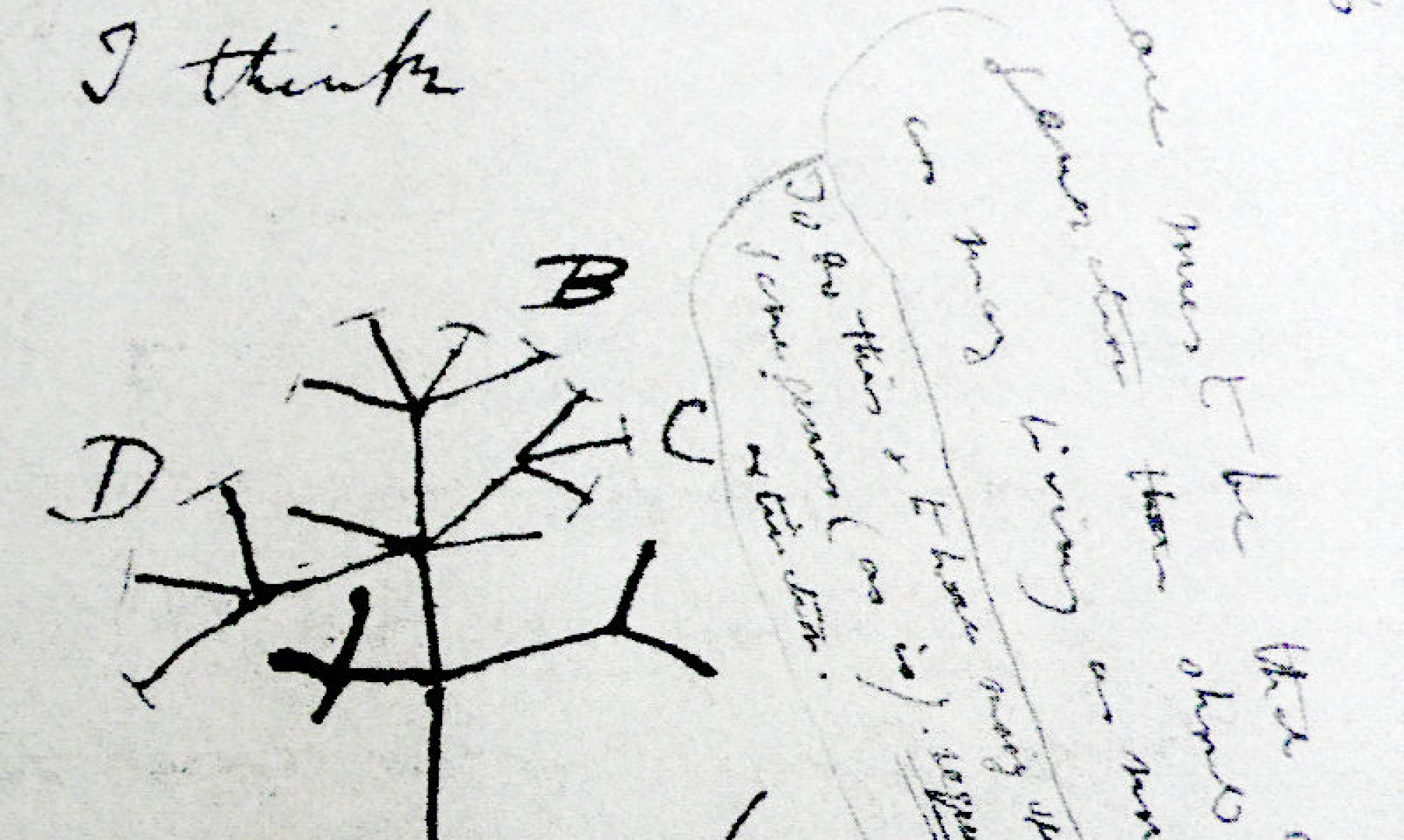
To answer questions like these, researchers make use of phylogenetic trees—diagrams that show how different groups of living things are related and from whom they evolved. If we can trace the ancestry of a bunch of these leaf-warblers, surely, we can get a picture of how and when they spread across vast distances, right? This is where the work of Gräf et al. (2025) comes in, with their recent article published in the journal Diversity, titled “Climate-Niche Evolution in Leaf-Warblers (Aves: Phylloscopidae): A Matter of Phylogeny”.

A short podcast summarizing the article. Image of Tickell’s Leaf Warbler by Earthshine: https://commons.wikimedia.org/wiki/File:Tickell%27s_Leaf_Warbler.JPG
Continue reading “Phylogenetic Trees and the Climate-Niche Evolution of Leaf-Warblers”

The Benefits of Commitment in Black-headed Gulls

By: Karina Rodrigues, Joanna Soliman, Yenifer Oseguera, and Giana Youssef (Stonehill College, BIO323: Evolution, Spring 2023)

Overview

Loyalty, a quality some lack and some do not. Have you ever thought about the positive effects loyalty has on people, better yet species? In terms of evolution, loyalty translates to how committed a species is to its breeding partner. Originating from the Netherlands, black-headed gulls (Chroicocephalus ridibundus) were used to study the benefits of long-term relationships and if it plays a role in how parents invest more with their partners as well as their pair bond with one another. These seabirds were studied in a model environment that fits the birds natural needs in order to exhibit their natural behaviors. After testing different mechanisms, selection for mate retention reduces parental care conflicts between a pair and also sheds light to selecting traits that increase individuals fitness throughout evolution.

A short podcast summarizing the article.
Continue reading “The Benefits of Commitment in Black-headed Gulls”

Why do birds get divorced?

Divorce in Savannah Sparrows of Kent Island

by: Michael Calcagno, Meghan Ghazal, Lizzie Poyant & Zarir Sidhwa (Stonehill College Evolution Fall 2017)

In Savannah sparrows (Passerculus sandwichensis) that reside on Kent Island, New Brunswick, Canada an understanding of divorce rates within the species was analyzed to determine the molecular basis of the phenotypic trait. As well as, to determine if divorce is an adaptive strategy for greater fitness for females. In this species, approximately 47% of pairs in which both partners survived to the following breeding season ended in divorce. Neither the lifetime number of divorces nor whether an individual had ever divorced affected the fitness of either sex, thus suggesting little to no sexual selection for the trait. Divorce in the Savannah sparrows appeared to be an inheritable behavior in which expression depending primarily upon an individual’s age, mating status, sex, and size.

Listen Now:
Continue reading “Why do birds get divorced?”