By: Ali Alsaadi, Colton Burkhart, and Alexio Trichilo (Stonehill College, BIO323: Evolution, Spring 2026)
A recent study published in Science Advances by Emmanuel Cazottes and colleagues reveals that one of the most important genes in the human body is XIST. It has kept its function over millions of years of evolution, but the way it is controlled has changed dramatically across primates. This research shows that evolution can reshape genetic “control systems” without disrupting essential biological processes, offering new insight into how genes evolve and why this matters for human health.
By: Aisling Finnegan, Gracie Knudsen, & Angela Peri (Stonehill College, BIO323: Evolution, Spring 2026)
Even small choices in nature can have big effects over time. In Bahamas mosquitofish, the way females respond to males can influence who mates, and over time, can lead to the formation of new species. When talking about species in the context of this article, it is a group of organisms that can successfully mate and produce offspring. Speciation happens when populations of the same species become so different that they no long mate. This process often begins with behavioral isolation, which is when groups stop choosing each other as mates.
In the study we highlight here published in BMC Ecology and Evolution, Varpu Pärssinen and others examine if living in different environments could cause these kinds of behavioral changes. The researchers studied Bahamas mosquitofish, which are small freshwater fish that live in streams and ponds in the Bahamas. They observed populations that live in areas filled with predators and others that live in environments with a lack of predators. They notice that these differences in predation levels influence how the fish behave and live.
A short podcast summarizing the article. Image of Bahamas mosquitofish by Araújo et al. (2014): https://onlinelibrary.wiley.com/doi/full/10.1002/ece3.1140Continue reading “How Female Fish Shape Evolution”
By: Emily Desrosiers, Molly Nyhan, and Tyler Umbra (Stonehill College, BIO323: Evolution, Spring 2026)
In the forests of Europe and Asia, there is a group of small, greenish birds called leaf-warblers. These birds look physically identical to the average person as well as many experts. For years, they have been an evolutionary puzzle: how do species that look so similar end up living in such vastly different environments?
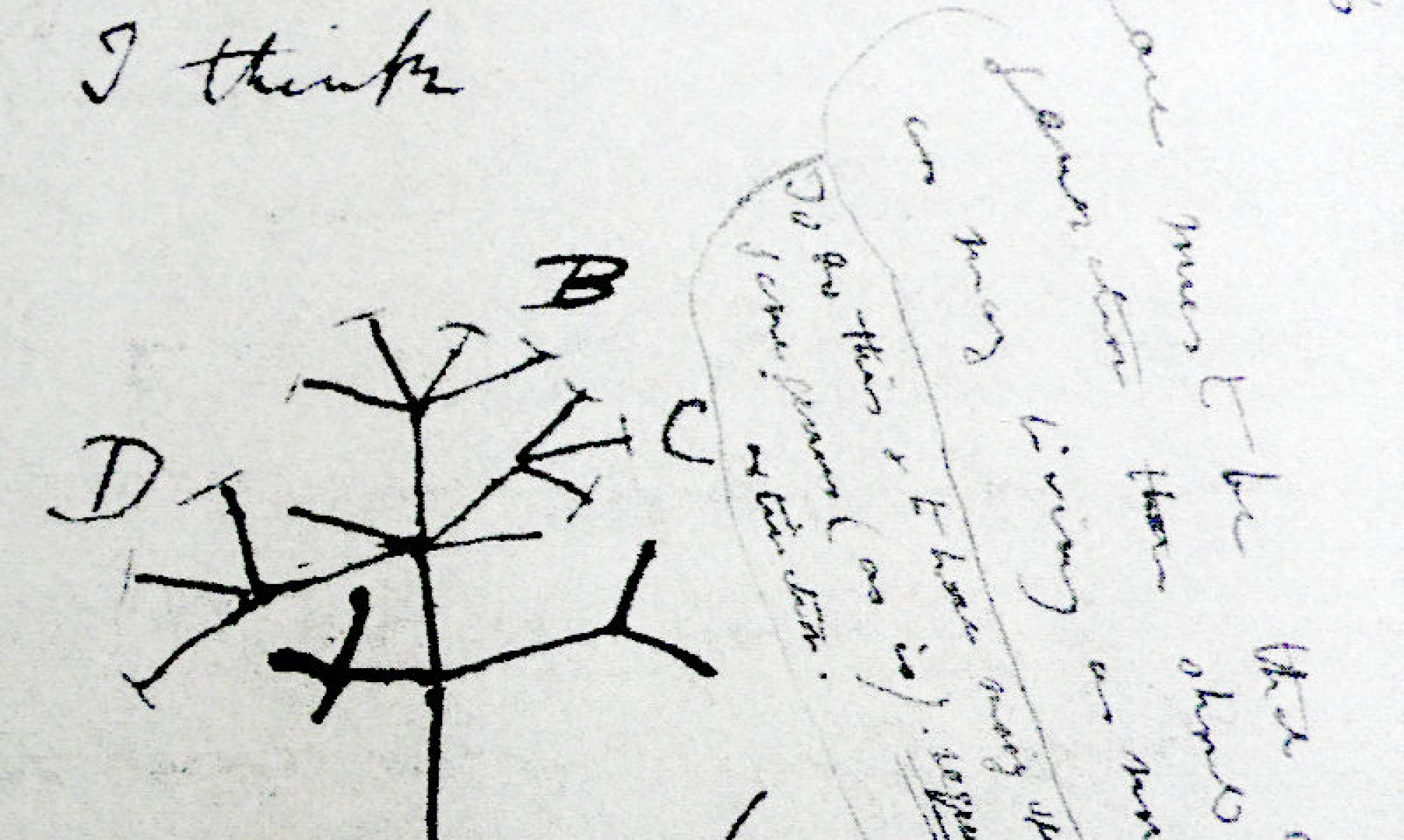
To answer questions like these, researchers make use of phylogenetic trees—diagrams that show how different groups of living things are related and from whom they evolved. If we can trace the ancestry of a bunch of these leaf-warblers, surely, we can get a picture of how and when they spread across vast distances, right? This is where the work of Gräf et al. (2025) comes in, with their recent article published in the journal Diversity, titled “Climate-Niche Evolution in Leaf-Warblers (Aves: Phylloscopidae): A Matter of Phylogeny”.
By: Haley Lussier, Madison Navega, and Madison Warren (Stonehill College, BIO323: Evolution, Spring 2025)
Did you know humans are most closely related to chimpanzees? Chimpanzees are remarkably diverse in their adaptation to different habitats, just like we are. Whether you are from Australia or the United States, your population can adapt to the habitat you are in. One cannot deny that change affects habitats, species, and the planet as a whole. Conservation biology has become a vital field for understanding and preserving biodiversity. One key concept in this field is local genetic adaptation, which ensures a species is well-suited to its environment and retains the potential to adapt over time. The recent Science article “Local genetic adaptation to habitat in wild chimpanzees,” by Dr. Harrison Ostridge and 73 coauthors, investigates the differences in the genetic makeup of wild chimpanzee populations to look for evidence that these differences provide an advantage in different environments. Dr. Ostridge completed this research as part of his Ph.D. dissertation at University College London, where he focused on population genomics and its relationship to disease adaptation.
By: Savannah Jeffrey, Julia Ciccolo, & Julia Bennett (Stonehill College, BIO323: Evolution, Spring 2025)
Overview: In many populations of cave-adapted animals, there is an increased presence of single-nucleotide premature termination codons, known as PTCs, that lead to traits losing function. PTCs are a type of mutation that cause a random stop to genetic replication processes, which can have deleterious effects on how traits are expressed. PTCs have been observed in the genetic makeup of many evolved cave species like cavefish, specifically the Mexican tetra, Astyanax mexicanus. Mexican tetras can be found in central and eastern Mexico, as well as in Texas. They originated in bodies of waters such as lakes and rivers, where eventually some Mexican tetras colonized cave systems and formed new populations. Due to these smaller population sizes in these environments, these mutations are subject to much stronger genetic drift, which occurs when alleles increase or decrease by chance in a population. This phenomenon causes traits to become more common or disappear entirely, thus making a population genetically distinct from their ancestors. Cave environments have their own unique selective pressures and allow the loss of traits to be advantageous for organisms, mainly features like eyesight, pigmentation, and circadian cycling. Allocating resources to these traits in an environment where they are not required provides no benefit to these organisms, therefore the loss of them actually positively impacts the species’ fitness, allowing them to invest in other metabolic processes. Additionally, the majority of PTCs arise in redundant genes, reducing the risk of losing genes that are vital for survival.
By: Rebecca Lancaster, Madilyn Robinson, and Savannah Ledo (Stonehill College, BIO323: Evolution, Spring 2025)
Overview
The Costus genus, commonly known as spiral gingers, is in the Costaceae family and is distinguished from other gingers by its unique spiraling leaves. Costus comprises over 80 species of perennial herbaceous plants native to Central and South America. Previous research demonstrates the Costus genus has independently evolved from the ancestral bee-pollination trait to hummingbird pollination multiple times. In The Convergent Evolution of Hummingbird Pollination Results in Repeated Floral Scent Loss Through Gene Downregulation, Dr. Kathy Darragh and her team examined over 30 Costus species’ floral scent compositions to understand how the species evolved from bee to hummingbird pollination. The study highlights the importance of selection, where certain traits are favored while others are lost to conserve energy costs. By comparing floral scent compounds, emission, and gene expression between bee-pollinated and hummingbird-pollinated Costus species, we gain a deeper understanding of the genetic factors driving floral scent evolution.
By: Moussa Abboud, Victoria Pinaretta, Jack Ryan, and Cameron Sarkisian (Stonehill College, BIO323: Evolution, Spring 2023)
Just as natural selection acts on land, the creatures of the sea experience the same selective pressures! As a mode of evolution, natural selection works by weeding out those who are not as fit as others, while promoting those who are most successful at survival and reproduction. If the history of evolution has taught us anything, it is that one important way to make sure your genes get passed on through your offspring is to become the best at adapting to your environment! A great example of such a concept is visualized in nine-spined sticklebacks (Pungitius pungitius), where the predatory avoidance behaviors of freshwater and marine populations provide insight into the differences in how they evolved this behavior from a common ancestor. Here, we summarize an article about these sticklebacks that was published recently in Evolution by researchers from the University of Helsinki.
By: Emily Almeida, Caroline Houghton, Nathan Skopas, and Jada Thornton (Stonehill College, BIO323: Evolution, Spring 2023)
Three-spined Sticklebacks, Location of Study, and Introduction The three-spined stickleback (Gasterosteus aculeatus) is a species of fish that can be found in temperate regions of the northern hemisphere and in seawater and freshwater habitats in the Atlantic and Pacific basins. Sticklebacks have long been considered a model organism for studying adaptive radiation, due to their parallel diversifications between freshwater sticklebacks and their marine ancestors. Adaptive radiation is defined as the rapid increase in the number of closely related species characterized by great ecological and morphological diversity. The driving force behind adaptive radiation is an organism’s adaption to a new environment. In this article from Ecology and Evolution, the population of three-spined stickleback fish studied were native to two Scottish islands, North and South Uist. Specifically, the diversity in the number and type of bony armor plates in species native to both islands were compared. Bony armor plates are structures on the fish that run along their backside and help to protect the fish from predators. Based on prior work, it was observed that the populations located on North Uist showed immense diversity, which was thought to be related to diversity of aquatic habitats within the area. On South Uist, evolutionary diversity within the stickleback population was significantly less, despite similar levels of diversity within the surrounding habitats. The diversity in pH on North Uist, and lack thereof on South Uist, has likely led to this drastic difference.
By: Jentry Allen, Isabella Caldarone, Jacqueline Foley, and Nicole Godbout (Stonehill College, BIO323: Evolution, Spring 2023)
Overview Dogs are said to be a man’s best friend as they are wonderful companions and can be trusted like no other pet; they are loyal to a fault. We find comfort in our dogs, maybe even purpose. Some people are willing to put their lives in the hands of dogs, allowing them to be their eyes, tell them if a food contains an allergy that may cost them their life, and inform a person if they are on the brink of an epileptic attack so that they may find a safe space and be prepared. An article from The American Naturalist titled, “High Investment in Reproduction is Associated with Reduced Life Span in Dogs”, discusses research on this ever-reliable friend and pet that shows a pattern in their life span in relation to offspring production. It was found that higher reproductive investment, or the work and energy that goes into reproduction, causes a decrease in canine life span. Additionally, it was discovered that this effect on life span was greater for larger dog breeds. With breeders today who want to breed more and larger puppies, we questioned the possible evolutionary effects of artificial selection, or the act of humans breeding animals to achieve a certain characteristic. If a breeder selects for a larger litter with larger puppies, the reproductive investment will be higher, and in theory, the life span of the mother will be decreased. Hear more about our discussion on this topic on the Everyday Evolution podcast!
By: Hailee Arena, Caitlin Swanson, Elizabeth Cravinho, and Matthew Healy (Stonehill College, BIO323: Evolution, Spring 2023)
Just like your ex, being toxic is not always obvious! Did you know that frogs can display warning signals that indicate their toxicity, known as aposematism? Aposematism is a strategy employed by organisms to advertise toxicity to deter predators through color patterns. While this is a common trait, conspicuous coloration does not always signal toxicity. What causes coloration to evolve? Can toxicity depend on other factors, such as body size or time of activity? Due to this knowledge gap between conspicuousness and toxicity, Drs. Roberts, Stuart-Fox, and Medina, from the University of Melbourne, conducted research titled, The evolution of conspicuousness in frogs: When to signal toxicity?, as published in the Journal of Evolutionary Biology. The researchers collected data on various frog species to determine whether toxicity is linked to coloration. They examined the chemical defenses in these species and sought to identify whether body size and daytime (diurnal) activity could be linked to conspicuousness in chemically defended frogs. Ultimately, the researchers hypothesized that the conspicuous coloration in diurnal species is directly related to toxicity.